As Primary UI/UX Designer & Front-end Developer, I took this app from concept through App-Store submission on both iOS and Android. Built in Flutter, designed in Figma, iterated through client & user feedback.
The increasing prevalence of smartphone addiction poses significant challenges for young adults aged 18-30. Studies reveal that excessive screen time adversely impacts mental health, productivity, and overall well-being. While several apps address digital wellness, most are limited to screen time tracking, lacking the holistic tools necessary to drive meaningful behavioral change. FitPhone fills this gap by incorporating educational content, peer accountability, and gamification into its framework.
Before this project, many available digital wellness solutions failed to engage users effectively. Common pain points include an over-reliance on tracking metrics, a lack of personalized advice, and limited options for social support or motivation. FitPhone seeks to go beyond these limitations by providing a dynamic, user-centered approach to wellness that integrates actionable guidance with communal support.
The primary goal of this app is to empower young people to take control of their smartphone usage and overcome procrastination by fostering accountability, personal growth, and social connections. This will be achieved by creating a space where users can set specific, measurable goals, track their progress, and engage with others facing similar challenges. The app's features will encourage consistent participation, with weekly meetings and progress tracking to ensure continuous improvement. By incorporating gamification elements, users will be motivated to stay engaged through rewards and recognition, while peer accountability will offer support and encouragement to help each individual achieve their personal goals. Ultimately, the goal is to create a supportive, community-driven environment that fosters real-world connections and positive behavioral change.
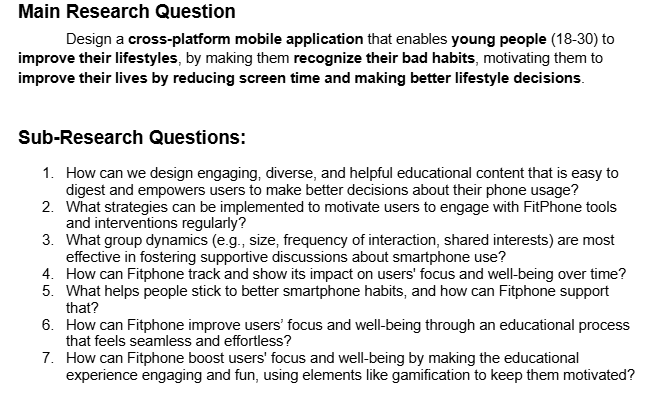
First I started the project by making questions and criteria, this allowed me and my group to easily identify problems and find different ways for us to solve what the client wants.
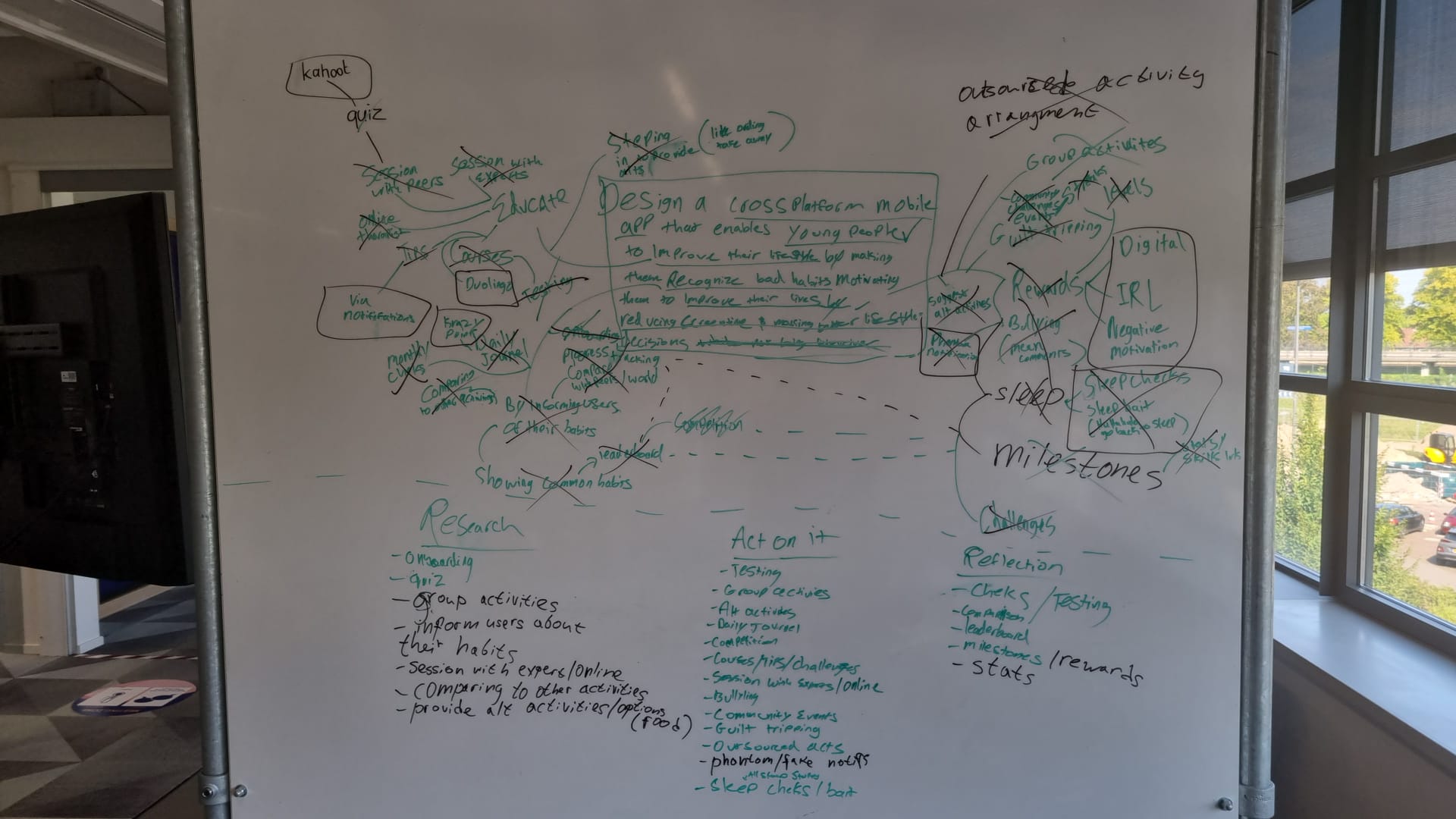
This approach allowed us to develop our core concept, which became the cornerstone of the project. By refining our ideas based on the research question and creative brainstorming, we were able to focus on the key aspects that would best address the challenges we aimed to solve. This core concept set the stage for further development and guided the decisions we made throughout the process.
One of the main things the client asked for was a way for the users to see their counter movement jump statistics to be able to track their fatigue. I took my own initiative to create a research document so that it was possible for my group to have a full understanding of what needs to be incorporated into our applications.
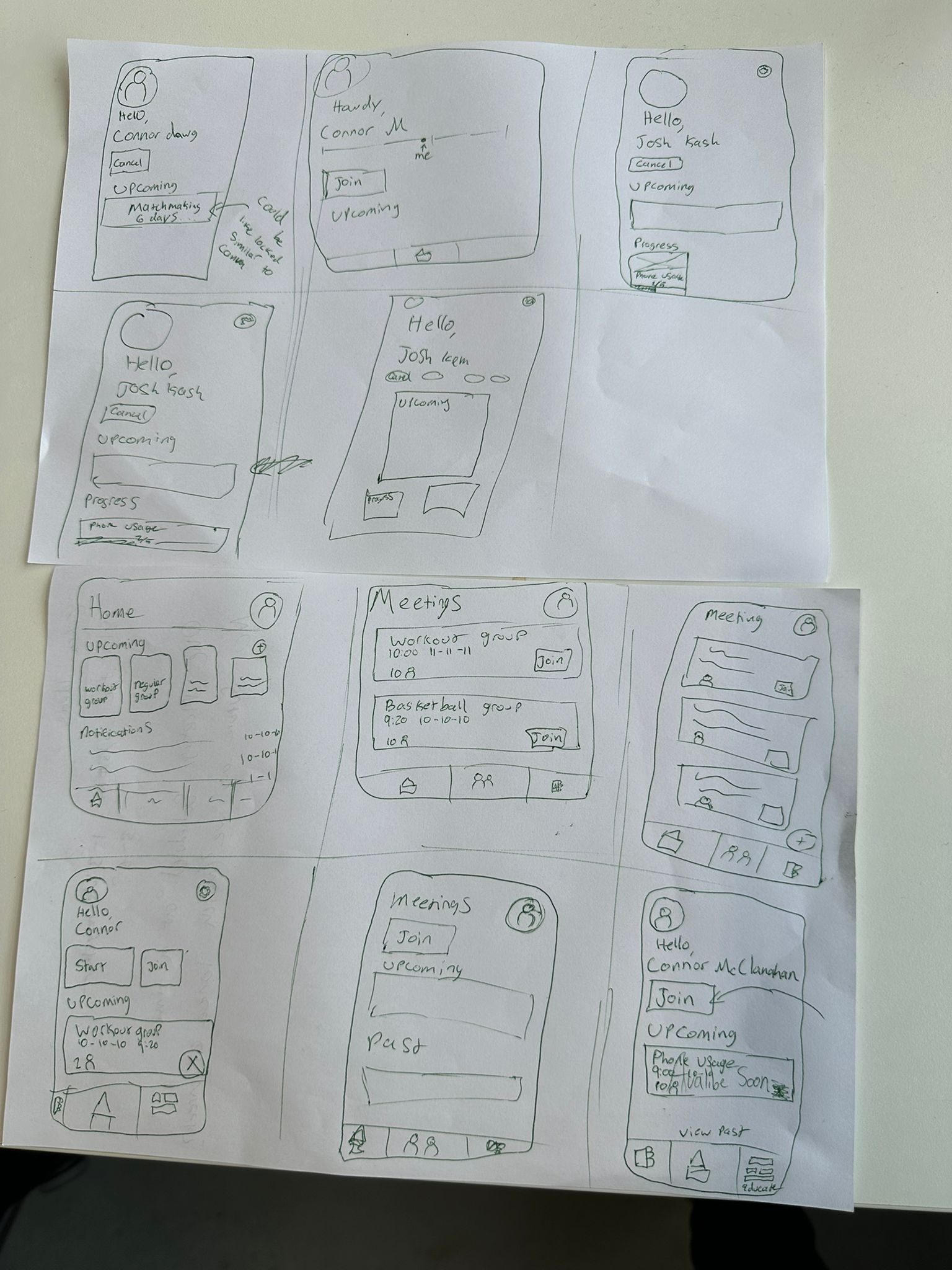
To properly visualize our product we created low fidelity wireframes so that we could know exactly what the client wants, and what screens need to be shown and tested.
Throughout the development of FitPhone, we held biweekly meetings with our client, which provided consistent opportunities for feedback and collaboration. The client also engaged minor students and target audience members, enabling us to gather diverse perspectives. These sessions encouraged innovative ideas like integrating habit reflection, screentime reduction strategies, and personalized activity tracking. We conducted thorough research on user behavior, iteratively refining the app based on insights gained. Key updates included adding stories to enhance engagement, weekly reflections for users, and options to visualize progress. The collaborative approach and iterative development process ensured that FitPhone evolved into a well-rounded and user-centric product that aligned with the client's vision and needs.
Outlined FitPhone’s 4-step structure. Discussed core ideas and scheduled initial follow-ups.
User feedback session with 5+ participants. Brainstormed features, prioritized pickups over screentime, and outlined tech research tasks.
Analyzed screentime reduction strategies. Proposed integrating lifestyle coaching, motivational stories, and location-based events.
Planned collaborative research strategy. Discussed features like user matchmaking, manual progress tracking, and offline incentives.
Focused on app data visualization and storytelling. Confirmed stories as key differentiator versus competitors.
Received positive UI/UX feedback. Finalized concepts for home page activities and scheduled exhibition for Jan 10, 2025.
The proposed feature set, guided by the MoSCoW analysis, ensures FitPhone focuses on essential functionalities like matchmaking and meeting management while integrating enhancements to boost user engagement. By prioritizing core features and leaving space for future growth, the app is well-positioned to meet user needs effectively and adapt to evolving feedback.
Initial sketches focused on core functionalities like matchmaking and Education.
Refinements included polished UI elements and interactive features like meetings and overall style and design.
The development of the FitPhone focused on creating an engaging, educational experience that encourages healthier smartphone habits without becoming intrusive or annoying. The primary goal was to develop a user-friendly interface that tracks phone usage and provides valuable insights in a seamless and motivating way. We built the app using Flutter, ensuring a smooth and responsive experience across different devices. We followed an Agile Scrum methodology throughout the process, using Teams Planner to schedule tasks and track progress with additional bi-weekly retrospectives.
During user testing and feedback sessions with the client, we made several adjustments to the final design and functionality. One key change was deciding against implementing a full login and account system. This was because we realized it wasn't necessary for our app, as we could utilize local storage instead. Since we aren't storing any user information, this approach also addressed privacy concerns. Additionally, as we continued developing the app and worked through each of the FitPhone steps, we discovered more efficient ways to implement our ideas. These improvements led to a design that was not only more professional and user-friendly but also maintained the style we established in our high-fidelity prototype.
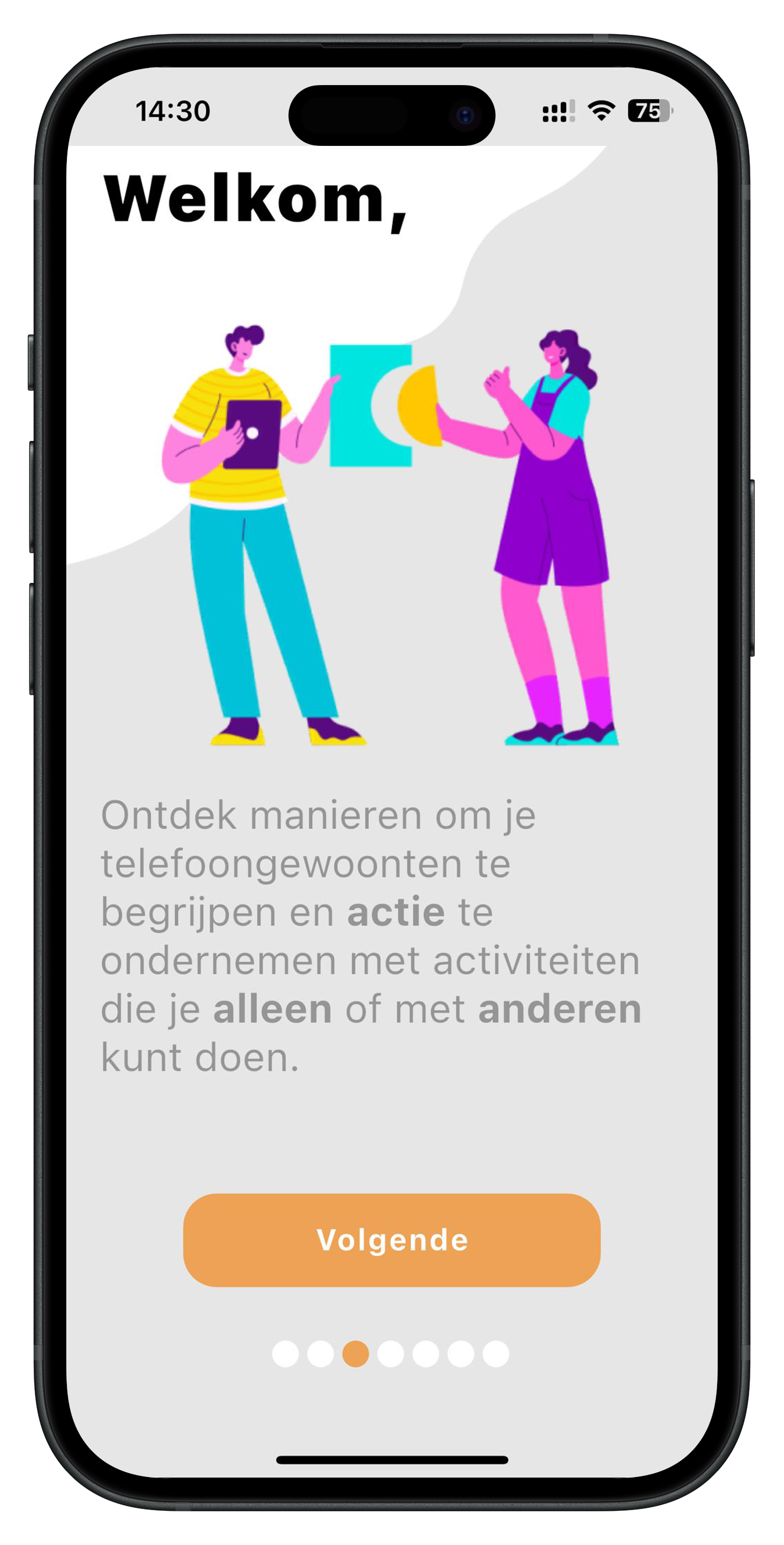
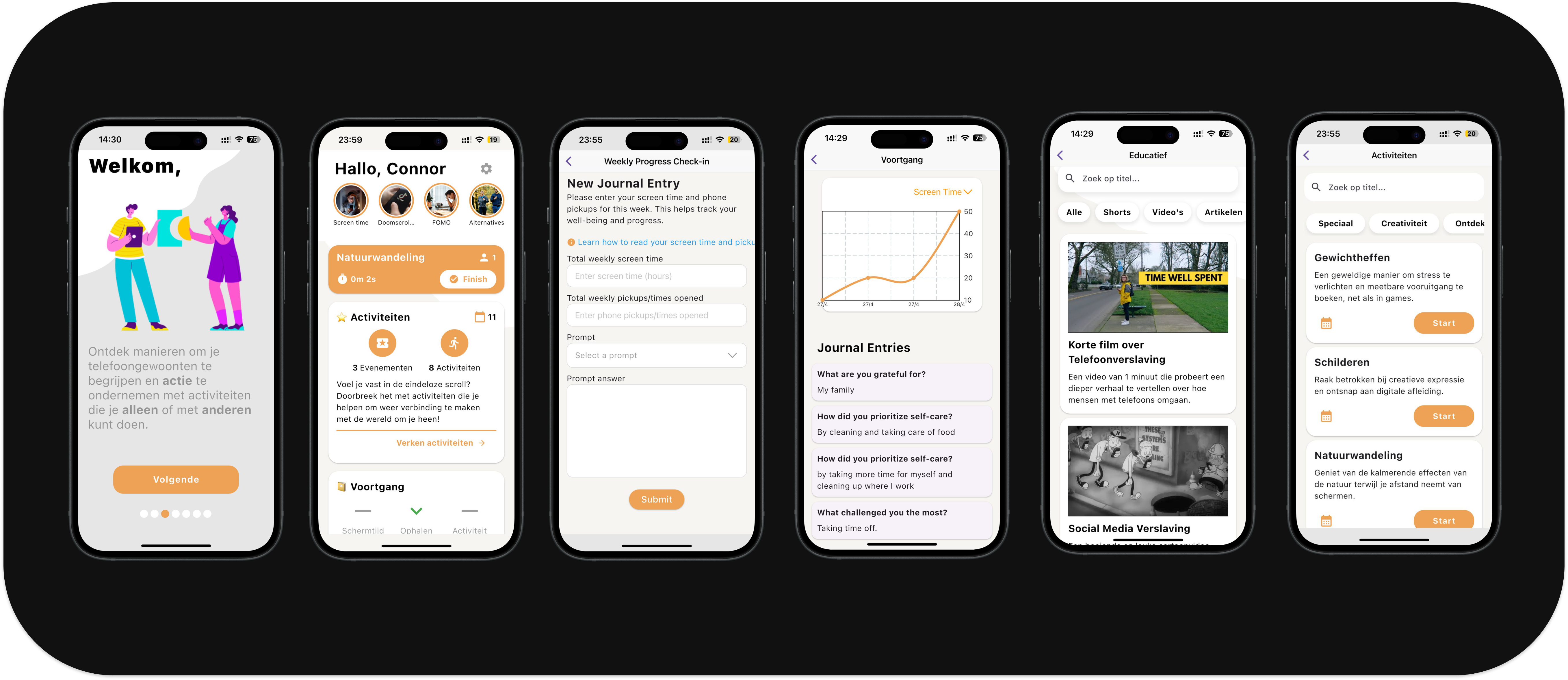
During onboarding, users identify the challenges they want to solve. Based on their choices, the app recommends personalized resources and activities to help them achieve their goals.
Central hub showing personalized activities and progress based on the user's selected goals, with tracking and gamified achievements to keep engagement high.
Lists of alternative actitivys related to the users intrestrests, has group and individual activtys.
Access educational resources and activities based on your interests, supporting both individual and group learning.
Reflect on your phone usage each week by recording your screen time, number of pickups, and answering guided reflection questions.
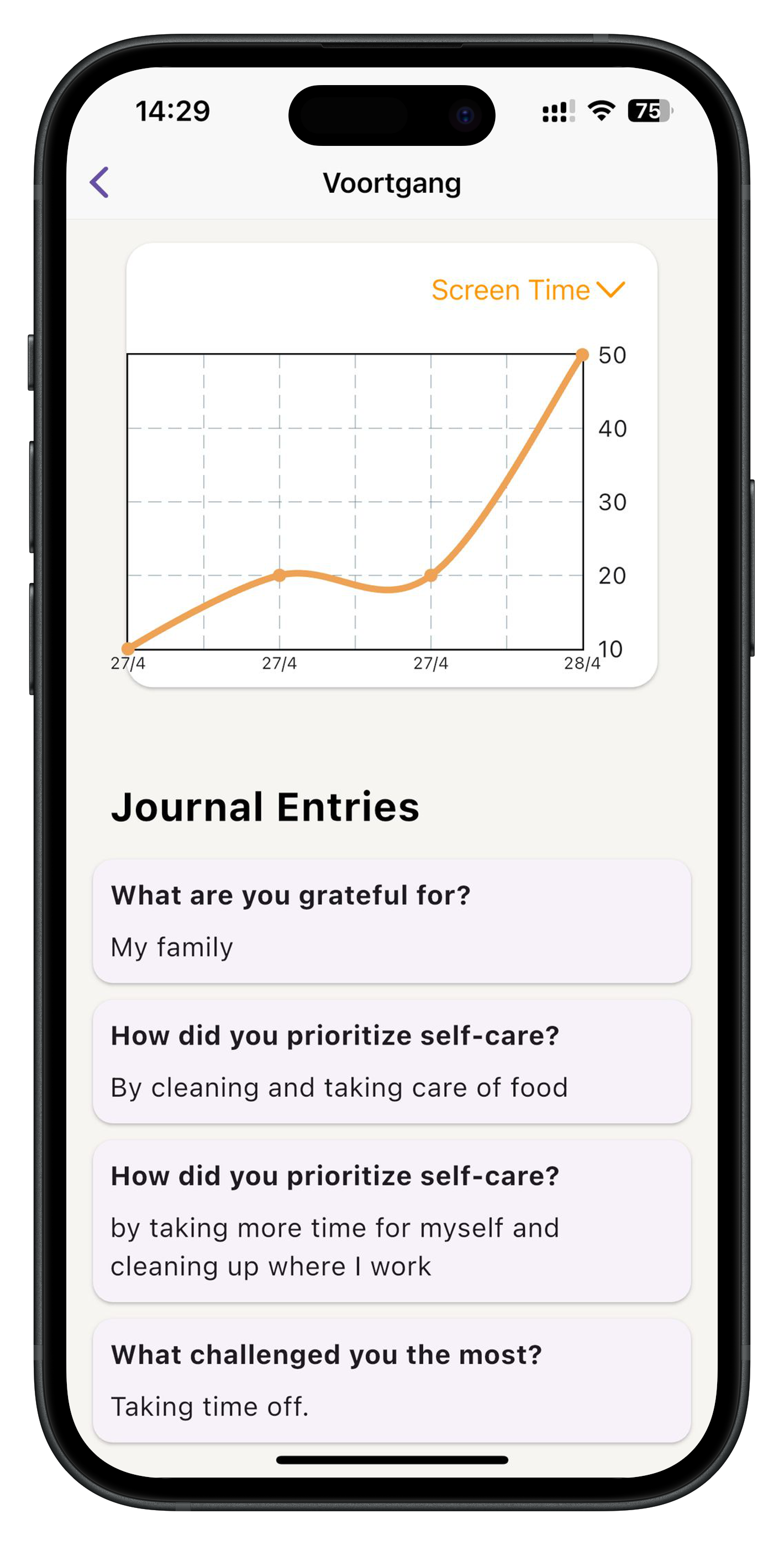
The Stats screen provides users with a visual overview of their screen time, pickups, and overall phone usage trends. It helps users track their progress, identify patterns, and stay motivated to improve their digital habits.